FeaturedInternal SystemUI/UXFull-stack2025
Archiving System
Every letter in its place, and only for those allowed to see it.
An electronic archive for an organisation's incoming and outgoing letters, with a separate register for secret letters and per-user permissions. It runs inside the organisation, on its own machines.

Overview
An organisation was keeping its official correspondence on paper and in scattered files: letters coming in, letters going out, and a smaller set of secret letters that only a few people should ever see. We designed and built an electronic archive for all of it, in Arabic, that runs inside the organisation on its own machines.
The Challenge
Four kinds of letters: Each with its own register and its own people.
Confidentiality: Secret letters had to stay out of sight for everyone without the right to see them.
Searchability: Staff needed to find any letter quickly: by number, subject, sender, date, or status.
Security: The system could not live on the public internet.
What We Built
Four Registers
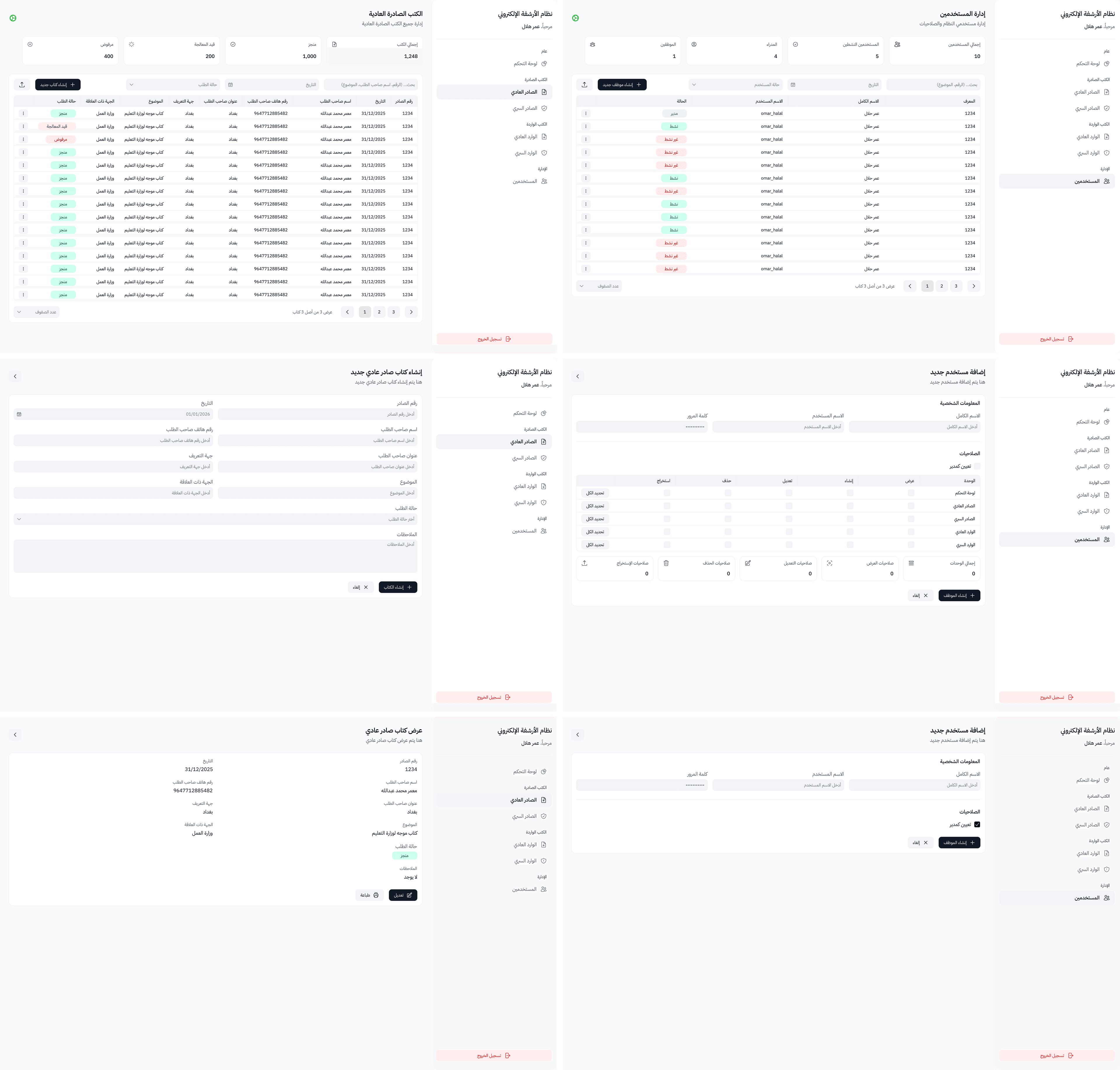
Ordinary and secret letters, each split into incoming and outgoing. Every letter keeps its reference number, date, subject, the related party, the applicant's name, phone and address, notes, and a status: completed, in progress, or rejected.
Dashboard
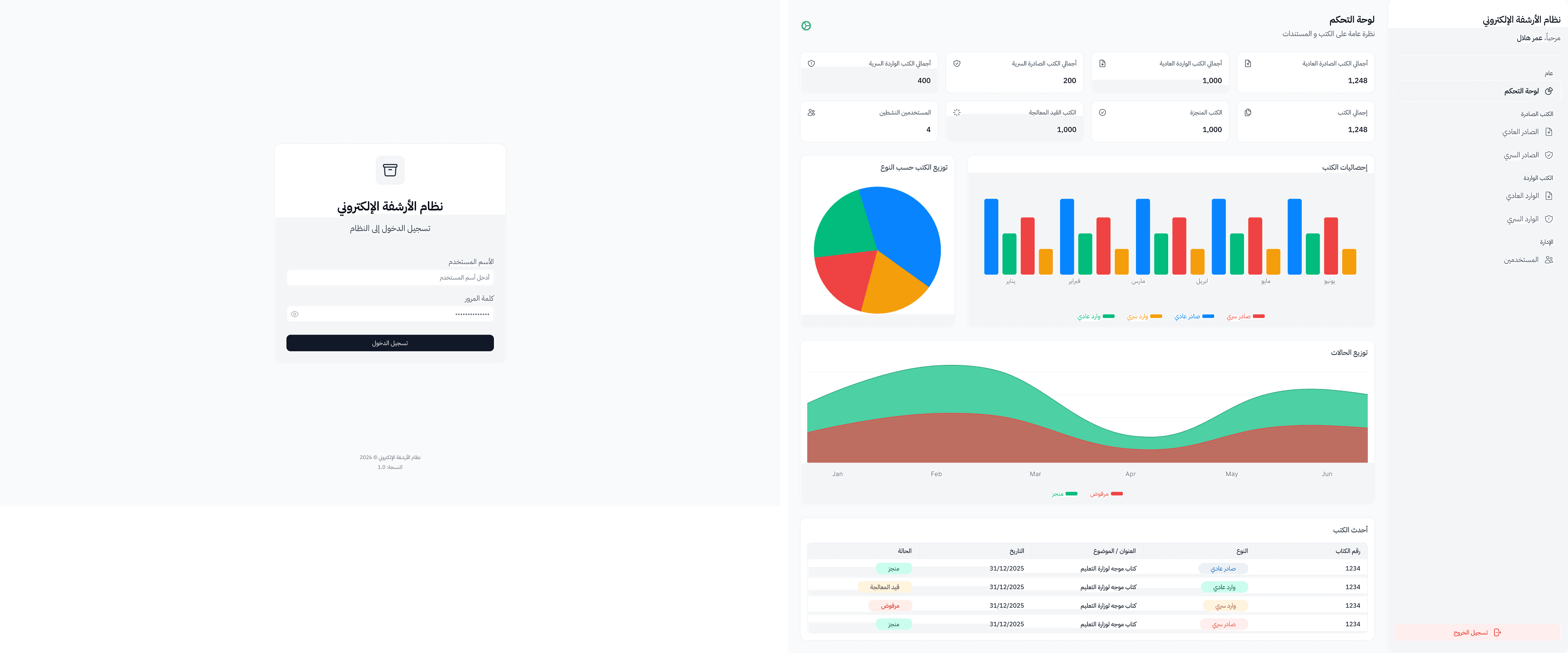
One screen with the totals for every register, letters by status, and charts of the archive over time, so the day starts with the full picture.
Secret Letters
A separate register for confidential letters, with its own permissions. Only the people given access can open it, add to it, or export from it.
Permissions
An administrator sets, for each user and each register, who can view, create, edit, delete, and export. Twenty switches per user, set in one matrix.
Search and Export
Search, filter by date and status, and sort any register, then export what you see to Excel.
Every Screen
From signing in, to each register, to managing users: one consistent Arabic, right-to-left interface.
How It Runs
The system is installed on the organisation's own machines and works on its internal network. It has no public address.
Our Role
Interface and experience design, front-end and back-end development, and installation on site.
Built With
Frontend: Next.js and React for the interface, with TanStack Table, React Hook Form, Zod, and Recharts.
Backend: Django REST Framework API with JWT sign-in and a per-user permission matrix.
Deprekated — Building digital systems around real operational needs.